
Pool safety covers are now one of the most requested solutions for owners of in-ground and above-ground swimming pools. They are not simply accessories, but real protection systems designed to reduce risks, improve energy efficiency, and preserve water quality over time.
Safety is the primary reason for installing a certified cover. The presence of children, pets, or proximity to public areas makes it essential to adopt systems that can prevent accidental falls into the pool. A properly designed safety cover can support the weight of a person, prevent unauthorized access, and provide complete peace of mind for the owner.
Beyond protection, there are also concrete management and economic advantages. A covered pool loses less heat, reduces water evaporation, and limits the entry of dirt and debris. This results in lower energy consumption, reduced chemical use, and easier maintenance.
In recent years, construction technologies have made pool covers increasingly high-performing and aesthetically integrated into architectural settings. They are no longer intrusive elements, but customizable solutions that adapt to any project.
In this article, we analyze what pool safety covers are, the available types, the regulations they comply with, and the benefits they offer in terms of management and cost savings.
What Are Pool Safety Covers
Systems Designed to Prevent Accidental Falls
Pool safety covers are structures designed to completely close off the pool basin and prevent unintended access to the water. Unlike simple winter covers or summer solar blankets, these solutions are certified to support a specific load and ensure structural stability.
They are generally made from high-resistance materials such as reinforced PVC, multi-layer technical membranes, or rigid panels. The anchoring system is crucial: the cover is secured to the pool edges using tracks, rails, or recessed anchors that ensure proper tension and stability.
Certification is a key factor. In Europe, many safety covers comply with standards such as UNI EN 13561 or other technical regulations that certify their ability to withstand weight and weather conditions. Verifying certification is essential during the purchasing process.
Choosing a safety cover means installing a system specifically engineered to reduce the risk of accidents, not simply to keep debris out of the water.
Types of Pool Safety Covers
Manual and Automatic Solutions
Pool safety covers can be divided into different categories depending on their opening and closing mechanism and installation system.
Bar covers are among the most common solutions. They consist of a reinforced fabric supported by rigid aluminum bars that rest on the pool edges, ensuring resistance to weight. They can be manual or motorized.
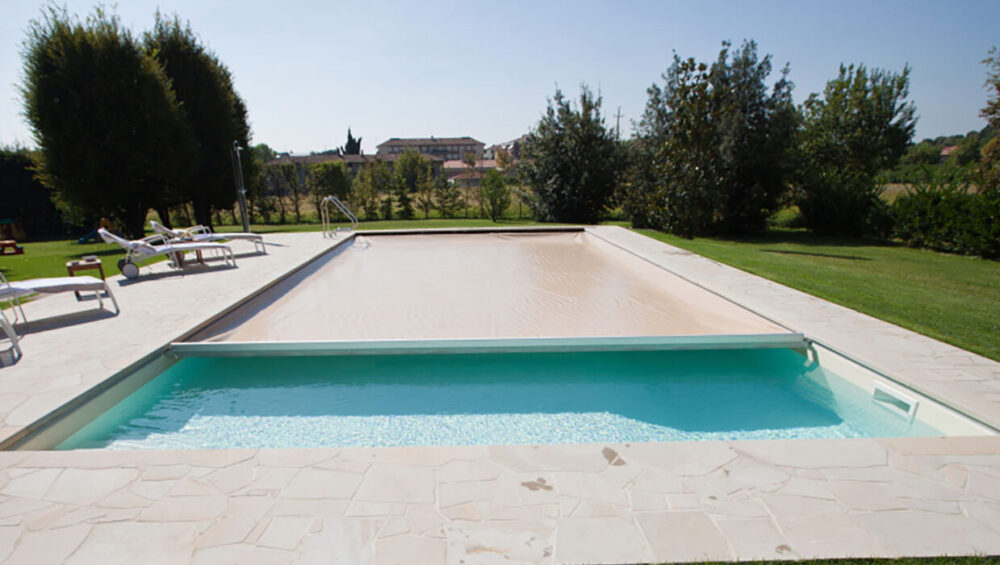
Automatic slatted covers represent a more advanced option. They roll up onto a drum, which can be installed above ground or integrated into a submerged compartment. They can be operated via switch or remote control, offering convenience and quick operation.
There are also track-mounted sliding systems or fully integrated architectural solutions, particularly popular in contemporary design projects.
The choice depends on several factors: pool dimensions, frequency of use, available budget, and desired level of automation. In all cases, the system should be custom-designed.
Regulations and Safety Requirements
Certifications and Owner Responsibility
When discussing pool safety covers, regulatory aspects must be considered. In Italy, there is no general mandatory requirement for private pools, but the owner remains responsible for ensuring the safety of the facility.
At the European level, safety covers must comply with technical standards that certify their ability to support loads, resist wind, and maintain long-term stability. Markings and technical documentation should always be requested from the supplier.
For hospitality facilities, agritourism properties, or public swimming pools, regulations may be stricter and require mandatory protection systems.
Working with a qualified professional ensures that the chosen solution complies with current regulations and is suitable for the intended context.
Energy and Management Benefits
Lower Costs and Greater Efficiency
Beyond safety, a certified cover provides tangible benefits in daily pool management.
Reducing evaporation helps maintain stable water levels and limits heat dispersion. This is particularly important for heated pools, where a cover significantly reduces energy consumption.
Chemical usage is also reduced, as the water is less exposed to external contaminants. Leaves, dust, and debris are prevented from entering the pool, resulting in fewer cleaning interventions.
Over time, these advantages translate into economic savings and longer system lifespan.
Pool Safety Covers: A Smart and Long-Term Choice
Pool safety covers represent a comprehensive solution that combines protection, energy efficiency, and improved facility management. They are not just accessories, but strategic investments for those who want to protect both people and property over time.
Choosing the most suitable system requires careful consideration of pool characteristics, architectural context, and usage needs. For this reason, it is always advisable to rely on industry professionals capable of offering certified and customized solutions.
Want to Improve Your Pool’s Safety?
Consider a technical consultation to identify the safety cover best suited to your project. A well-protected system means a safer, more efficient, and easier-to-manage pool.
Contact us with no obligation. We will guide you step by step, from concept to installation.